
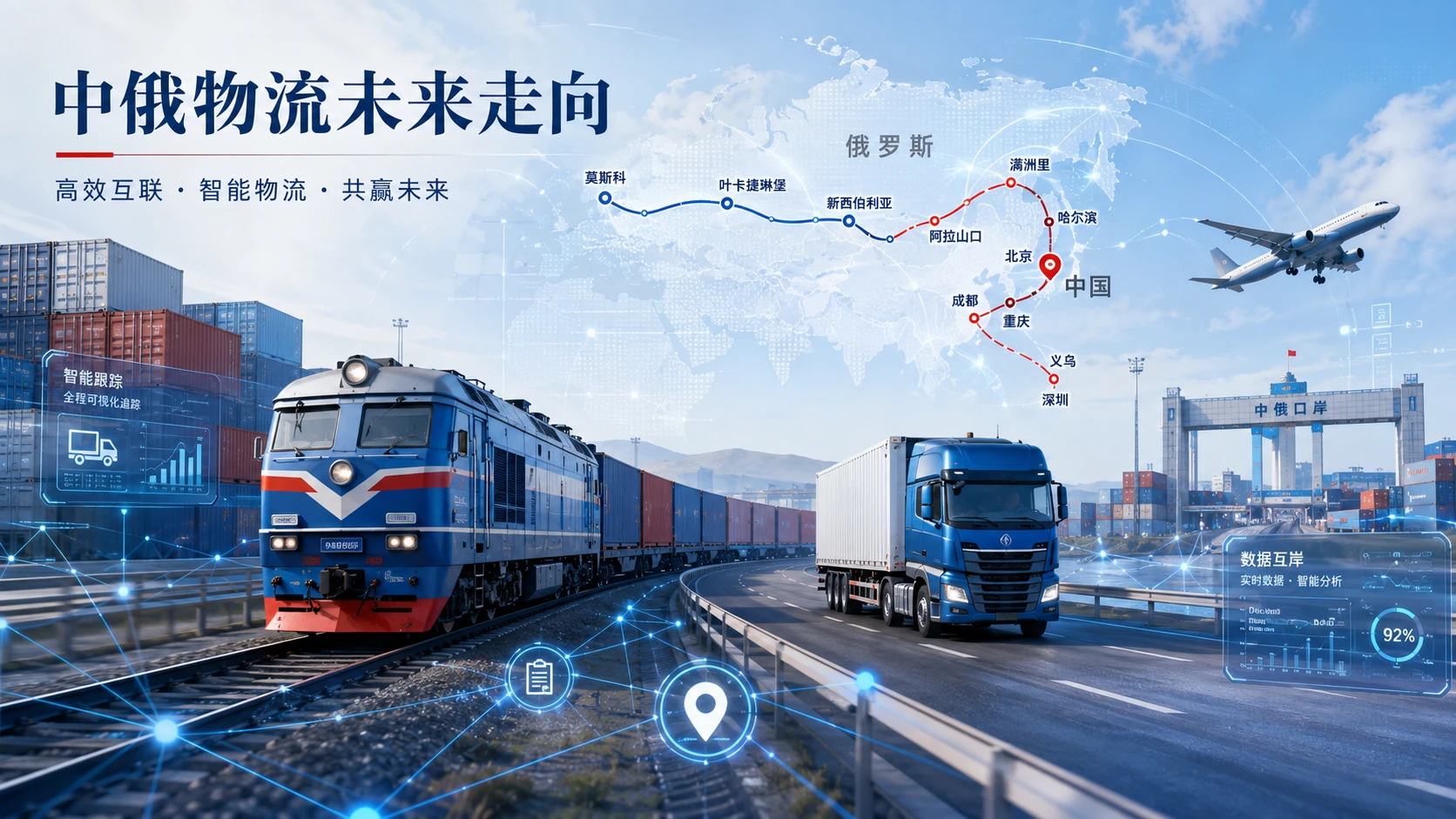
Executive summary. As China–Russia trade deepens, logistics is evolving from basic freight transport into an integrated supply chain covering sourcing, order payment, warehousing, export declaration, international transport, Russian customs clearance and final delivery.
Even during short-term trade fluctuations, logistics demand remains substantial. The market is shifting from pure volume growth toward service quality, compliance, cost control and supply-chain stability. Competition now depends not only on the rate, but also on route resources, customs capability, digital management and local support.
1. From Low-Cost Shipping to Reliable Shipping
In the past, customers compared mainly the price per kilogram or cubic meter. Cargo owners now also evaluate transit reliability, shipment visibility, document quality and the ability to resolve delays, damage or inspections.
A competitive operator needs stable warehouses, corridors, declaration specialists, customs channels and Russian delivery resources. For CargoVIP168, safety, reliability and transparency mean clear quotations, warehouse acceptance procedures, packing photographs and milestone updates.
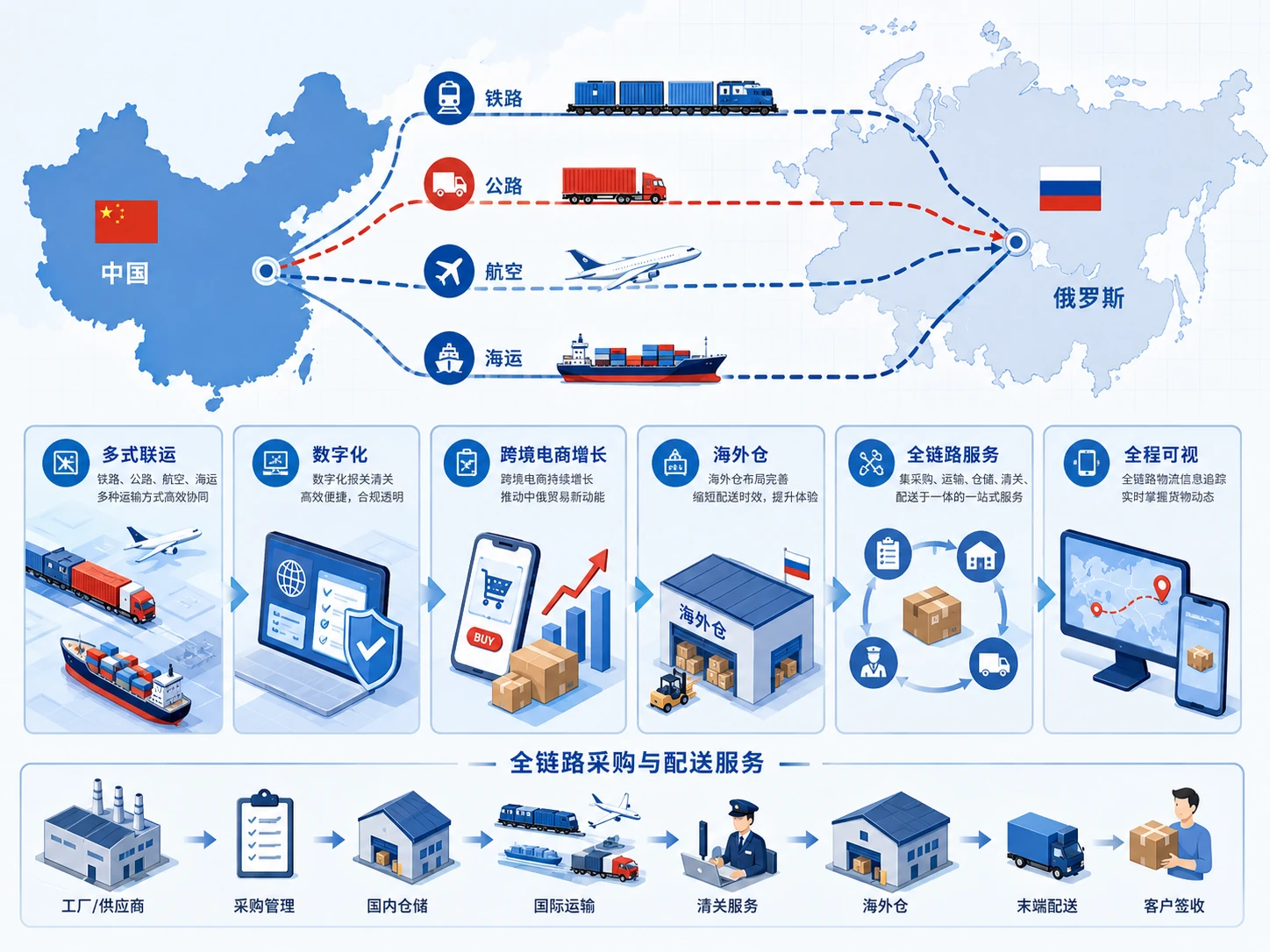
2. Rail, Road, Air and a Multimodal Network
Future China–Russia logistics will not rely on one mode. Rail provides capacity and stable schedules for machinery, auto parts, furniture, building materials, apparel and larger shipments.
Road freight is flexible for medium-volume or time-sensitive cargo. Through Manzhouli, Suifenhe, Heihe and other crossings, shipments continue to Moscow, Saint Petersburg, Yekaterinburg, Kazan and Novosibirsk.
Air freight remains valuable for electronics, samples, urgent replenishment and small parts. Sea and combined routes retain a cost advantage for heavy and non-urgent cargo. Road plus rail, sea plus rail, and rail plus Russian truck delivery will become more common.
3. Digital and Transparent Customs
Customs efficiency directly affects total transit time. Cooperation around single-window systems, smart customs and green corridors provides a foundation for faster trade-data exchange.
Providers should adopt electronic orders, standardized packing lists, accurate product descriptions and customs codes, online status, connected declaration-clearance-delivery information and early warnings.
CargoVIP168 can keep one structured record for the customer, product, quantity, weight, volume, value and route. WhatsApp, Telegram or a tracking system can report warehouse receipt, loading, China exit, customs release and arrival.
4. Smaller, More Frequent Shipments
Beyond vehicles, machinery and industrial goods, demand remains strong for apparel, footwear, furniture, household goods, beauty tools, electronics and consumer products. Russian small businesses often test goods in small quantities and combine several suppliers.
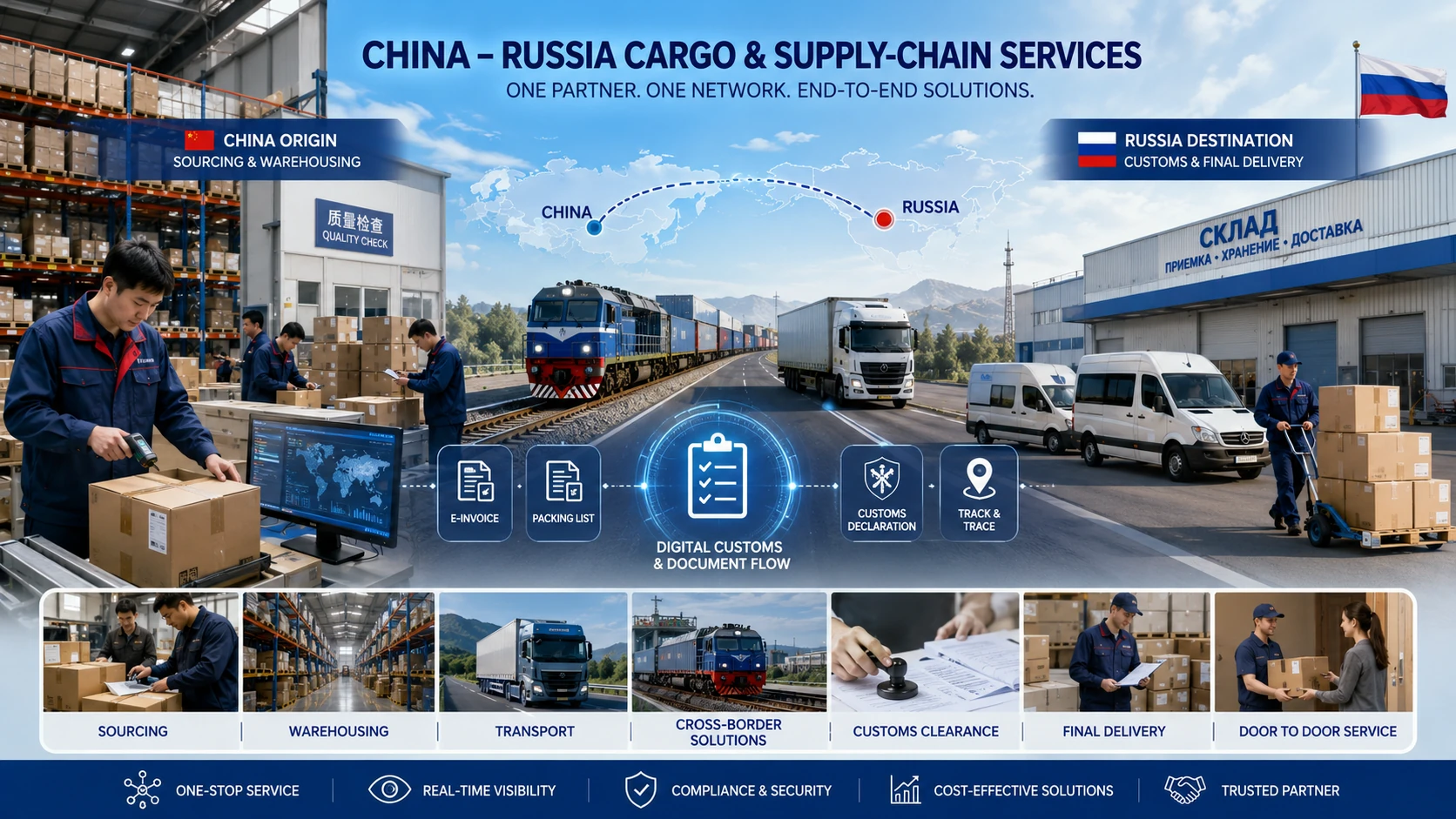
A competitive workflow is: find a supplier → confirm goods → pay → inspect quality → consolidate → pack → transport internationally → clear Russian customs → deliver to the destination. This distinguishes a supply-chain partner from a simple freight agent.
5. Russian Warehousing and Local Delivery
International transport is not the final stage. Russia is geographically large, so domestic distance strongly affects cost and time. Reliable partner warehouses in key hubs, especially Moscow, are increasingly important.
Local services should include storage, repacking, sorting, returns, Russian delivery, e-commerce fulfillment and wholesale pickup. The China side handles sourcing, inspection and consolidation; the Russian side handles post-clearance distribution and delivery.
6. Compliance as a Core Capability
Exchange rates, border congestion, policy changes, certification and payment risks continue to affect the market. Batteries, liquids, powders, branded goods, food, cosmetics, medical products and dangerous goods must be reviewed before acceptance.
A quotation should clearly separate China transport, storage, packing, export declaration, international freight, customs and Russian delivery. Formal invoices, cargo records, photographs and verified weight data are important trust signals.
7. Branding and Russian-Language Marketing
Russian customers increasingly find providers through Yandex, Google, Telegram and other online platforms. Useful Russian-language content and visible operating information create a professional brand.
Content can target “delivery of cargo from China to Russia,” “cargo from China,” “sourcing goods in China” and “logistics from China.” A professional website and fast communication help CargoVIP168 build long-term trust.
8. Priorities for Future Development
- Maintain rail, road, air and combined routes.
- Strengthen sourcing, inspection, warehousing, consolidation and packing.
- Digitize orders, warehouse operations, invoices and transport milestones.
- Build stronger Russian warehouse, service and delivery resources.
- Review cargo characteristics and documents before acceptance.
Conclusion
China–Russia logistics retains long-term potential, but the industry is moving toward digital management, multiple transport channels, compliant customs, overseas warehousing and integrated supply-chain services.
Price remains important, but reliability, transparency, cargo safety and problem-solving capability are becoming decisive. The future is helping customers through the complete journey—from sourcing and inspection to customs and final delivery.